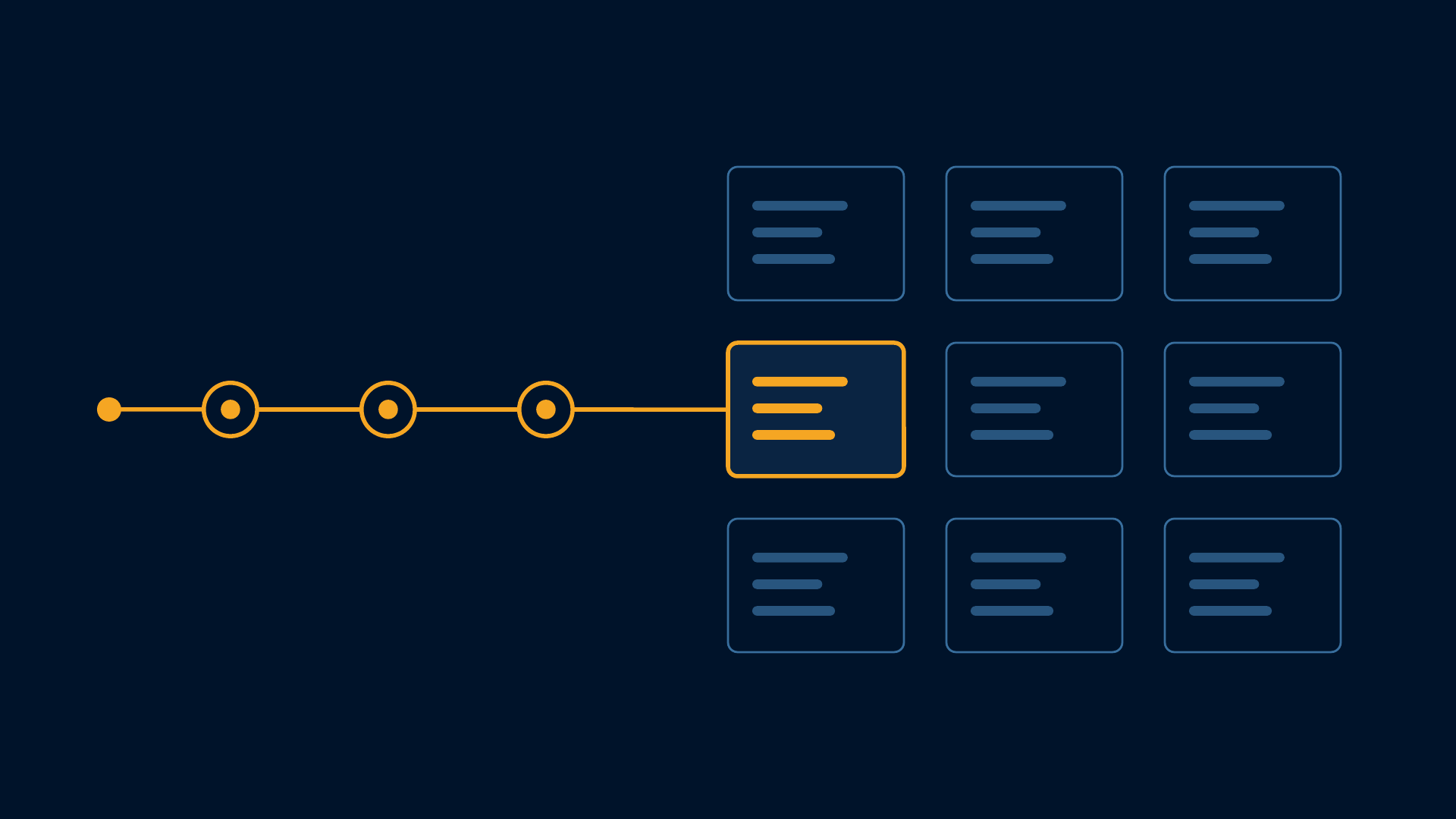


Introducing AI Launchpad: A Four-Week Way to Stop Guessing on AI
Your board wants an AI story. Your peers are already piloting something. Every vendor in your inbox has a deck with “AI-powered” on the cover. And somewhere in the back of your mind is a question you don't say out loud in the leadership meeting: are we behind?
That feeling has a name. The kids call it FOMO. You may call it “Tuesday.”
Here's what we'd tell you if we were sitting across the table: the anxiety isn't really about AI. It's about not having a place to start. You're not short on ambition. You're not short on ideas. You probably have a list of five things “someone should really look into.” What you don't have is a way to turn that list into something you can defend in front of a board, funded and sequenced, without betting the budget on a guess.
That's a starting-point problem. And it's the reason we built AI Launchpad: a four-week, fixed-fee engagement in our Data & AI practice that takes you from “we should probably do something with AI” to a scored, sequenced, board-ready roadmap, with a working prototype in hand, not just a slide about one.
The pressure is real. The panic doesn't have to be.
Every leadership team is being asked some version of the same question right now: what's our AI plan? The pressure comes from all directions: the board wants measurable progress, competitors are announcing pilots, and every software vendor you talk to insists their product is the obvious next move. Meanwhile, you're the one who has to say something concrete at the next board meeting, and “we're looking into it” doesn't hold up twice.
The instinct in that moment is to move fast: pick a use case, buy a tool, launch something visible. But speed without sequencing is how companies end up with three disconnected AI pilots, no shared data foundation, and nothing to show for the spend a year later. The teams that get this right aren't the ones who moved first. They're the ones who knew which one thing to build first.
What "starting" actually requires:
Getting from “we should do something with AI” to “here's what we're building and what it's worth” requires answering three questions most companies haven't actually answered:
- Which of our ideas are worth pursuing, and which just sound good in a meeting?
- What's each one actually worth, in dollars, not enthusiasm?
- What order do we build them in, and what does the first 90 days look like?
That's exactly the gap AI Launchpad is built to close.
What 4 weeks actually gets you:
The engagement is partner-led from day one and scoped once, with no change orders along the way:
- AI Opportunity Assessment: structured interviews with your leadership team, plus an inventory of your data, systems, and workflows, across up to 10 stakeholders in three business areas.
- Prioritized use-case portfolio: 20+ candidates scored on value, feasibility, and data readiness, narrowed to the top 3–5 worth pursuing.
- Business case & ROI model: quantified value, cost, and payback for each priority, built to survive board and sponsor scrutiny.
- 12-month AI roadmap: sequenced initiatives with owners, dependencies, and quick wins identified for the first 90 days.
- Execution-ready delivery plan: a fully scoped plan for your first initiative, so momentum doesn't stall the moment the engagement ends.
- A working prototype: a real proof of concept for one selected use case, built and delivered for hands-on testing, included in the fixed fee.
That last one is worth pausing on. A lot of AI assessments hand you a roadmap and a wish list. This one hands you something you can actually put in front of people and use. It's the difference between telling your board “we think this will work” and showing them that it does.
All of it comes at a fixed fee, all deliverables included. One scope, no change orders, no surprise invoice at week three.
How the 4 weeks run:
- Week 1, Discover: Stakeholder interviews and a full inventory of your data, systems, and workflows.
- Week 2, Prioritize: Use cases scored on value, feasibility, and data readiness.
- Week 3, Build: Roadmap sequencing, the ROI model, the business case, and the prototype build.
- Week 4, Deliver: An executive readout and a scoped delivery plan for what comes next.
Four weeks from kickoff to a funded, board-ready roadmap. Not a strategy deck. A plan with a price tag, a sequence, and a working example already built.
FOMO won't build you a roadmap
Watching the market move and wondering if you're falling behind is a reasonable reaction: it means you're paying attention. But it's not a plan, and it's definitely not a budget line the board will approve on its own. The companies that end up ahead in two years aren't the ones who reacted fastest to that feeling. They're the ones who turned it into a sequenced, funded starting point before everyone else figured out where to begin.
You don't need to have it all figured out. You need a place to start.


%20(4).png)